The Nightingale

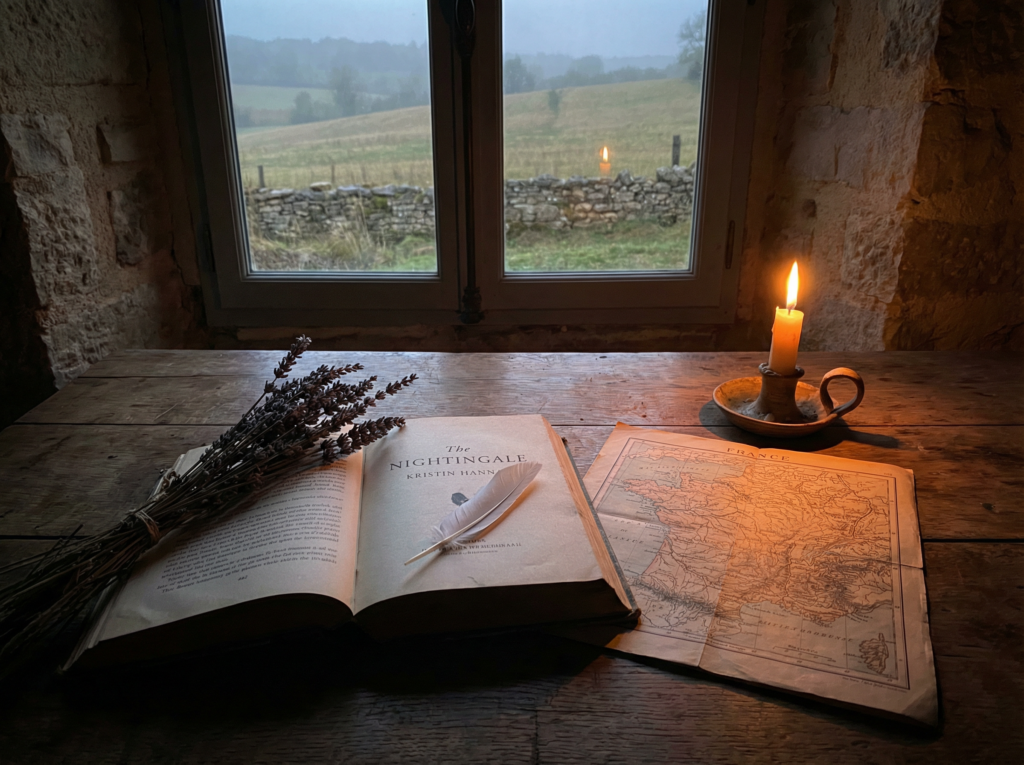
In the darkest hours of war, when humanity is tested to its limits, what choices define us? Kristin Hannah’s The Nightingale plunges readers into the harrowing realities of World War II, exploring themes of survival, sacrifice, and the extraordinary courage found in ordinary women. This powerful historical fiction novel, published in 2015, introduces us to two French sisters, Vianne and Isabelle Mauriac, whose divergent paths through the Nazi occupation illuminate the multifaceted nature of resistance and resilience. Hannah masterfully weaves a narrative that is both deeply personal and historically resonant, making “The Nightingale” a compelling and unforgettable read.
A Spoiler-Free Synopsis
Set in war-torn France, The Nightingale follows the lives of Vianne and Isabelle, sisters separated by age, experience, and temperament, yet bound by an unbreakable familial love. When the Germans invade France, Vianne, a quiet mother and wife, finds herself forced to quarter an enemy officer in her home, navigating the daily indignities and dangers of occupation while striving to protect her daughter. Her struggle is one of quiet, internal resistance, making impossible choices to ensure her family’s survival.
In contrast, her younger sister, Isabelle, is a fiery and rebellious spirit who refuses to stand idly by. Driven by a fierce sense of justice, she joins the French Resistance, risking her life to guide downed Allied airmen across the treacherous Pyrenees mountains to freedom, earning her the codename “The Nightingale.” Their stories, though distinct, are intertwined, showcasing different forms of bravery and the profound impact of war on individual lives and relationships. The novel skillfully builds tension and emotional depth without revealing the ultimate fates of its characters, leaving readers eager to discover how these two remarkable women navigate the perils of their time.
Key Themes and Ideas Explored
Kristin Hannah’s The Nightingale is rich with profound themes that resonate long after the final page. Among the most prominent are resilience and resistance, the strength of sisterhood, and morality and impossible choices.
Resilience and Resistance
The novel powerfully explores the various forms of resilience and resistance during wartime. Vianne’s quiet acts of defiance—protecting her child, feeding Jewish children, and maintaining a semblance of normalcy amidst chaos—demonstrate a different kind of bravery than Isabelle’s overt acts of rebellion. This duality highlights that resistance isn’t always about grand gestures; it can also be found in the quiet, everyday struggles to maintain humanity and protect loved ones. The book delves into how individuals adapt and find strength in unimaginable circumstances, making “The Nightingale” a poignant exploration of human endurance.
The Strength of Sisterhood
At its heart, The Nightingale is a story about the enduring bond between sisters. Despite their vastly different approaches to the war and their often-strained relationship, Vianne and Isabelle’s love for each other is a constant, driving force. Their individual journeys are shaped by their shared history and their unwavering commitment to family, even when circumstances threaten to tear them apart. This theme explores how sisterhood can be a source of both conflict and profound support during times of crisis.
Morality and Impossible Choices
The war forces both sisters, and indeed many characters in the novel, to confront agonizing moral dilemmas. Vianne must make compromises with the enemy to protect her family, while Isabelle faces life-or-death decisions daily in her work with the Resistance. The novel masterfully portrays the grey areas of wartime morality, where there are no easy answers and every choice carries immense weight. It prompts readers to consider what they would do in similar situations, exploring the complex interplay between survival, ethics, and personal conviction.
Writing Style and Narrative Voice
Kristin Hannah’s writing style in The Nightingale is both evocative and accessible, characterized by its emotional depth and immersive quality. She employs a clear, straightforward prose that allows the harrowing events of the war to unfold with stark clarity, yet it is imbued with a lyrical quality that captures the beauty and tragedy of the human spirit. The narrative primarily uses a third-person omniscient perspective, shifting between Vianne and Isabelle’s viewpoints. This dual perspective is crucial, offering readers a comprehensive understanding of the diverse experiences of women during the occupation and highlighting their contrasting forms of courage. Hannah’s ability to craft vivid imagery and compelling dialogue draws readers deeply into the characters’ inner worlds, making their struggles and triumphs intensely personal. The pacing is deliberate, building tension and emotional resonance as the story progresses, ensuring that the reader remains captivated from beginning to end.
Who Should Read This Book?
The Nightingale is an essential read for anyone who appreciates historical fiction, particularly those interested in the untold stories of women during World War II. Fans of authors like Anthony Doerr (All the Light We Cannot See) and Markus Zusak (The Book Thief) will find themselves deeply engrossed in Hannah’s meticulous research and emotional storytelling. If you are looking for a novel that explores themes of resilience, family bonds, and the moral complexities of war through the eyes of strong female protagonists, this book is for you. It’s also highly recommended for book clubs, as its rich themes and character development provide ample material for discussion.
Frequently Asked Questions (FAQ)
Is The Nightingale based on a true story?
While The Nightingale is a work of fiction, Kristin Hannah drew inspiration from the real-life stories of women who aided the French Resistance during World War II. Specifically, she was inspired by the story of Andrée de Jongh, a young Belgian woman who helped downed Allied airmen escape Nazi-occupied Belgium. Hannah conducted extensive research into the experiences of women in the Resistance and those living under occupation to create a historically accurate and emotionally resonant narrative.
Is there a movie adaptation of The Nightingale?
Yes, a film adaptation of The Nightingale has been in development. Originally, it was slated for release in 2020, but production has faced delays. The film is set to star sisters Dakota Fanning and Elle Fanning as Vianne and Isabelle Mauriac, respectively. As of early 2026, the movie is still anticipated, though a new release date has not been firmly set.
What does the title The Nightingale mean?
The title “The Nightingale” is a symbolic reference within the novel. It is the codename adopted by Isabelle Mauriac in the French Resistance. The nightingale bird is known for its beautiful song, often sung in the darkness, and its elusive nature. This symbolism perfectly encapsulates Isabelle’s role: she operates covertly, bringing hope and guidance to those in peril, much like a nightingale’s song in the night, leading people to safety and freedom.
Final Verdict
The Nightingale is a profoundly moving and meticulously researched novel that stands as a testament to the indomitable spirit of women during one of history’s darkest periods. Kristin Hannah has crafted a story that is both heartbreaking and inspiring, forcing readers to confront the difficult realities of war while celebrating the quiet acts of heroism that often go unnoticed. With its compelling characters, intricate plot, and powerful exploration of universal themes, this book is more than just a historical account; it’s a deeply human story that will stay with you long after you’ve turned the final page. I wholeheartedly recommend it.
5/5 stars
Have you read “The Nightingale”? Share your thoughts in the comments below!
Leave a Reply